
Rubric types
Zippy has three rubric types. You build or clone the first two. The third ships preconfigured, because its delivery criteria are scored by the speech engine.
Each one below follows the same shape: what it is, what it looks like in Zippy, and when to use it.
Score rubrics
What it is. A grid. Criteria down the side, bands across the top, a descriptor in every cell. The same shape as the marking scheme in your department folder.
In Zippy.
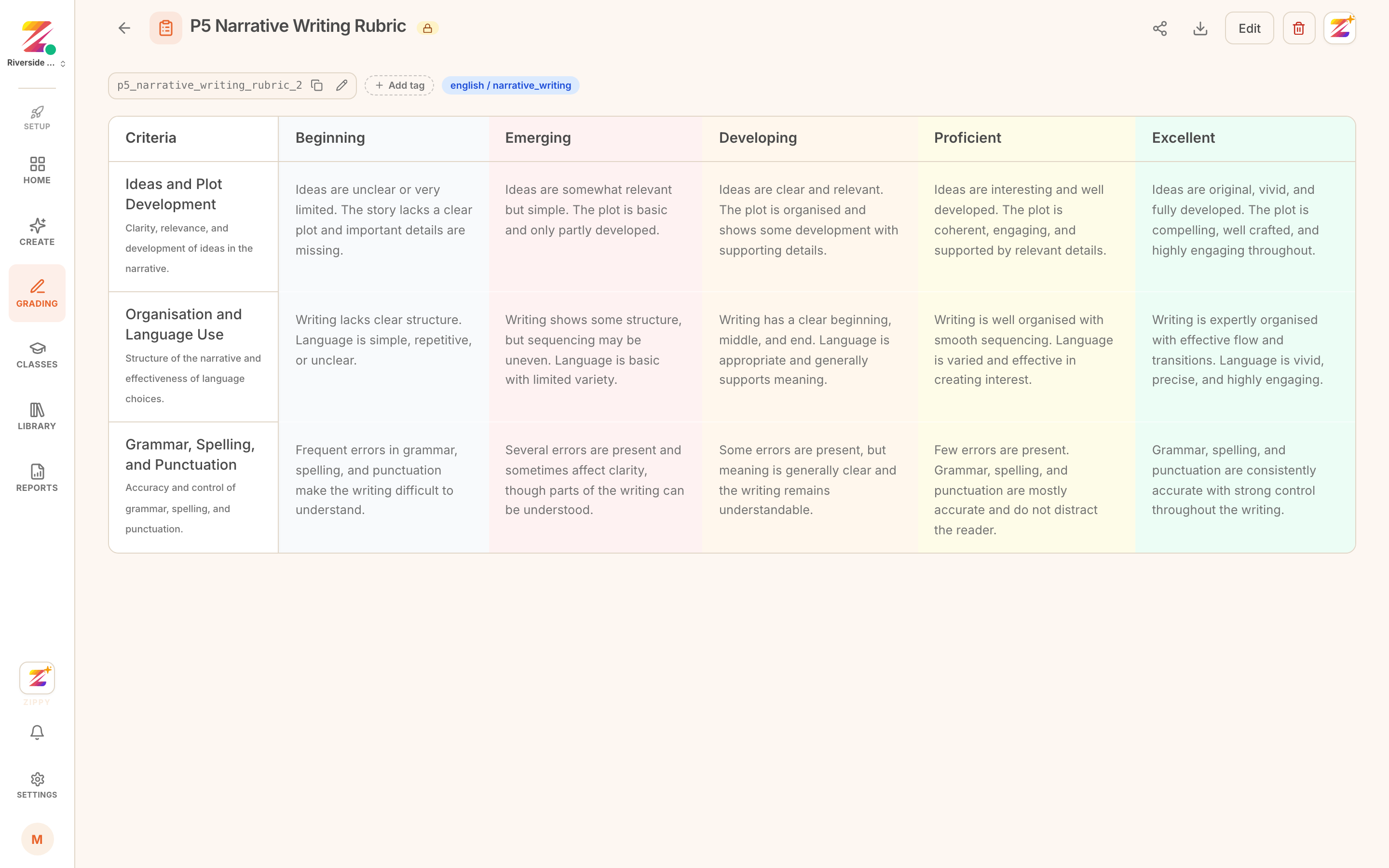
That is the shipped P5 Narrative Writing rubric. Three criteria, six bands, and a descriptor in every cell. The descriptors are what a script gets matched against, so write them the way you would explain the difference to a colleague marking alongside you. Vague descriptors give vague marks, and that is true of a human marker too.
Use it when you need a number: a report, a gradebook column, a mark out of twenty. What comes back is a band and a mark per criterion, and a total.
Skills rubrics
What it is. A list of the individual skills in your unit, each tracked across five levels and grouped into traits.
In Zippy.
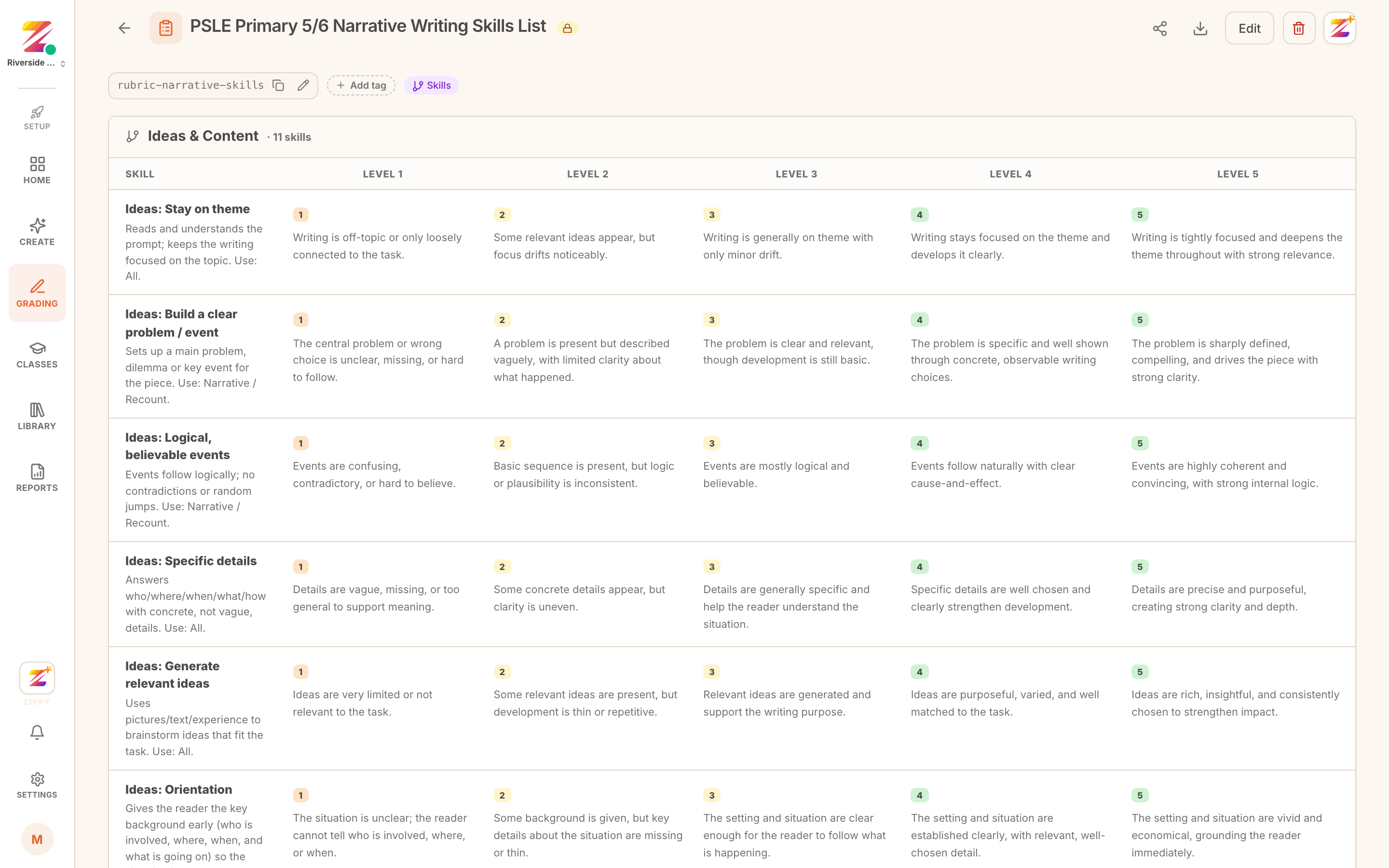
That is the shipped PSLE Primary 5/6 Narrative Writing Skills List. Eleven skills under Ideas and Content alone, each with a description of what it covers and five level descriptors. Every mark against a skill rolls up to its trait, so you can look at one child or the whole class and see that word choice is fine and conventions are not.
Use it when you are planning next week's teaching. A total tells you a child is mid-table. The skills breakdown tells you it was paragraphing and precise verbs, twice, in a class of thirty.
Speaking rubrics
What it is. A grid like a score rubric, for questions where the child speaks the answer. Delivery cannot be read off a transcript, so those criteria are scored by the speech engine and the rest are marked the way any rubric is marked. One table, one grade.
In Zippy.
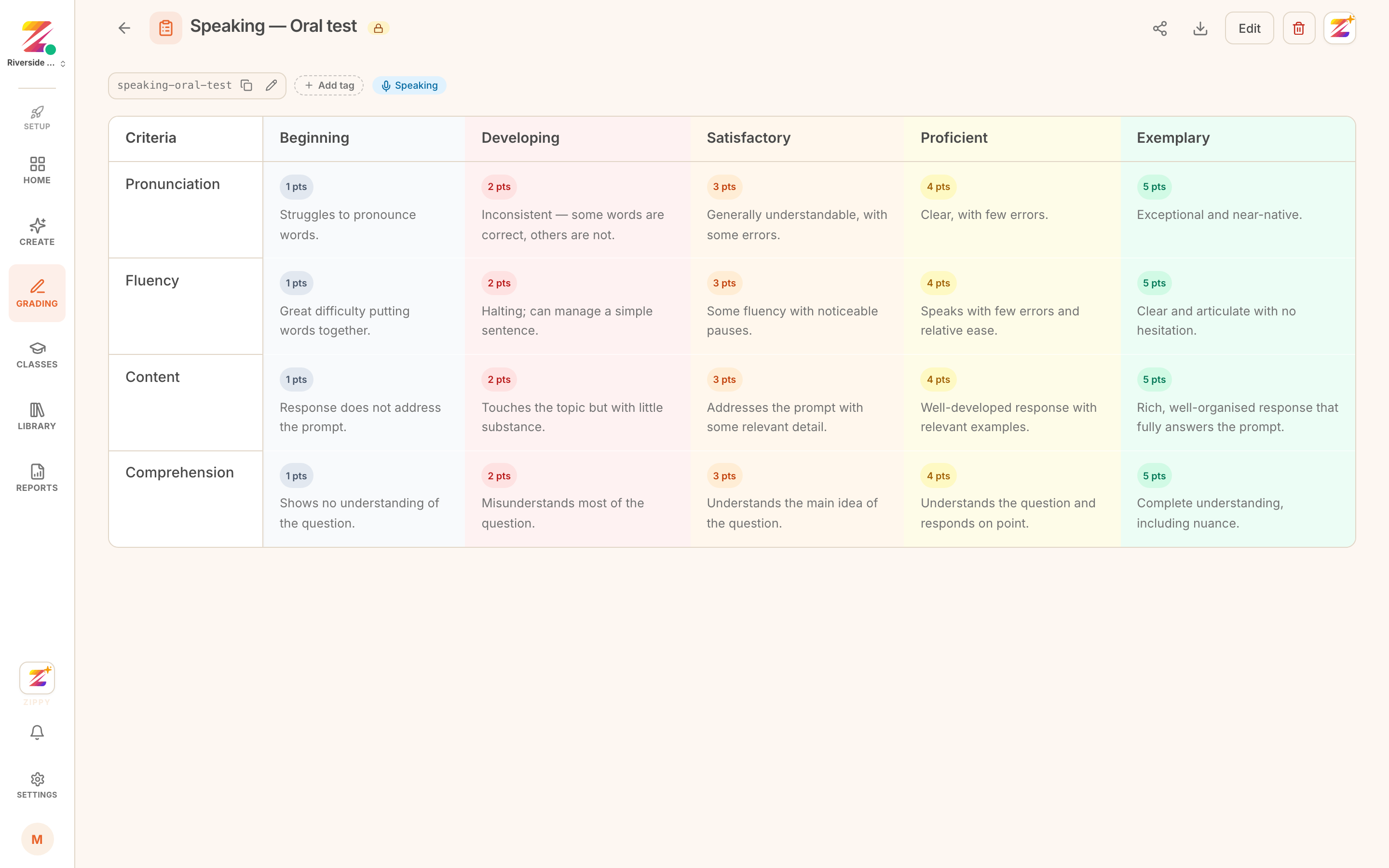
That is Speaking — Oral test, shipped with your workspace. Four criteria over the usual bands. Pronunciation and fluency are heard; content and comprehension are read from what the child said. Two more, intonation and completeness, are available for reading-aloud tasks.
| Criterion | Marked by | What it measures |
|---|---|---|
| Pronunciation | Speech engine | How accurately the words are produced |
| Fluency | Speech engine | Pace and hesitation |
| Intonation | Speech engine | Stress and rhythm |
| Completeness | Speech engine | How much of the passage was read |
| Content | AI grader | Whether the answer addresses the question |
| Comprehension | AI grader | Whether the child understood what was asked |
Clone it and delete the rows you are not teaching. A Primary 4 reading test might report pronunciation and completeness only.
Use it when the answer is spoken. The child records in the browser or uploads a clip, and either way it is marked the same. Two shapes:
- Reading aloud. Set the passage. Delivery is scored against that text, so a line skipped costs completeness rather than vocabulary.
- An oral question. Leave the passage empty and ask something open, like tell me about a project you led. The recording is transcribed, delivery is still scored, and content and comprehension mark what the child actually said.
Two rubrics on one oral
An oral test asks two things at once. How well did the child say it, and was the answer any good. Zippy marks both by putting two rubrics on the same question.
First rubric: how it was said. The speaking rubric, four criteria and 20 marks, two of them heard by the speech engine.
Second rubric: what was said. Your own marking scheme, unchanged. This one is the PSLE continuous-writing rubric out of the Discover library: content and language, 18 marks each, the same grid you use on compositions.
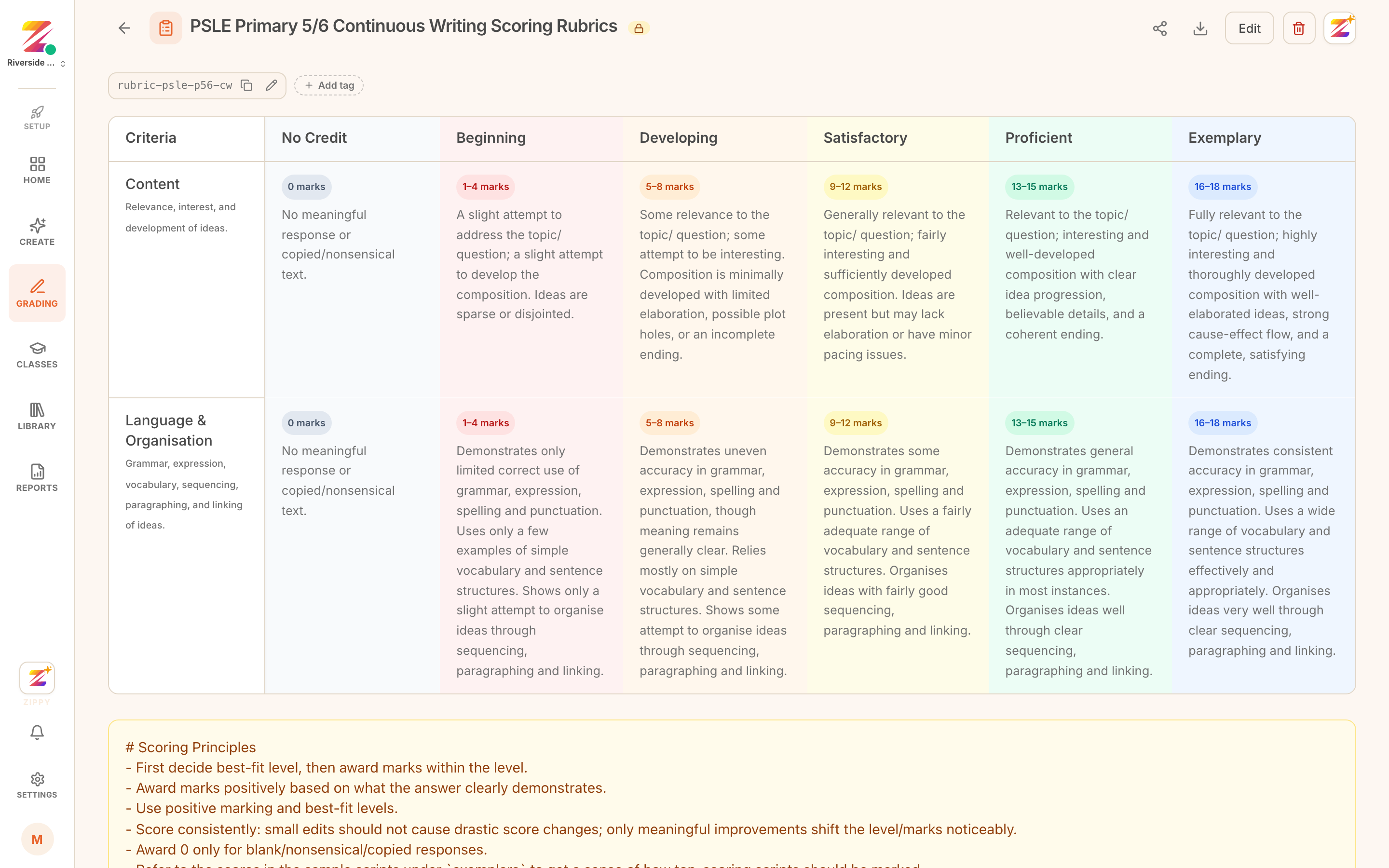
Both together. A preset is where you join them, and a question points at the preset.
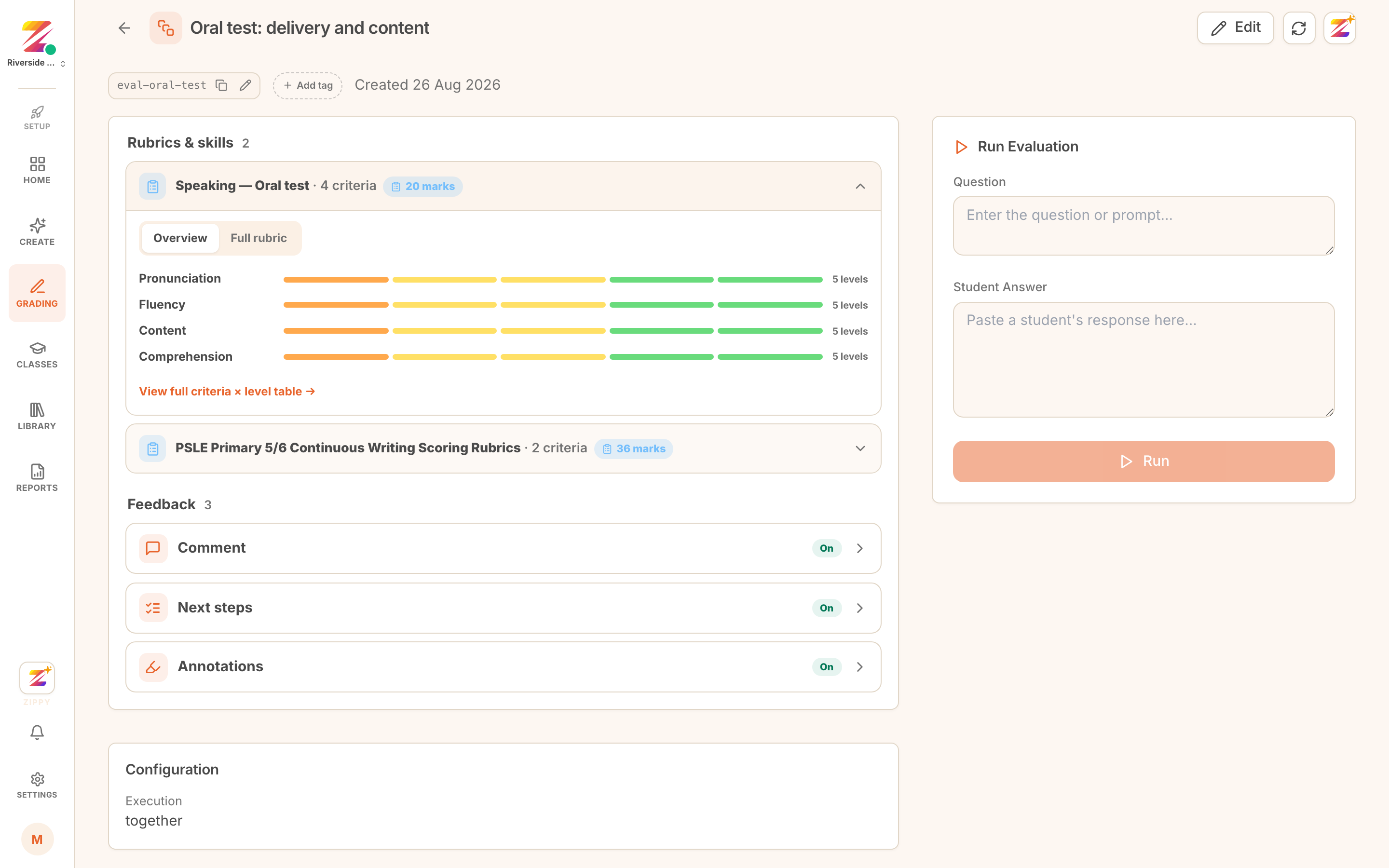
One recording, marked against both rubrics in one pass. Each keeps its own marks: a criterion out of 18 is reported out of 18 even when it sits beside one out of 5, and both of these rubrics have a criterion called Content without either taking the other's.
An oral test, end to end
One question from start to finish: it appears in the student portal, the child speaks the answer or uploads a clip, and the grade comes back from both rubrics.
An oral question, in the student portal.
The marks land in the same panel as a written answer:
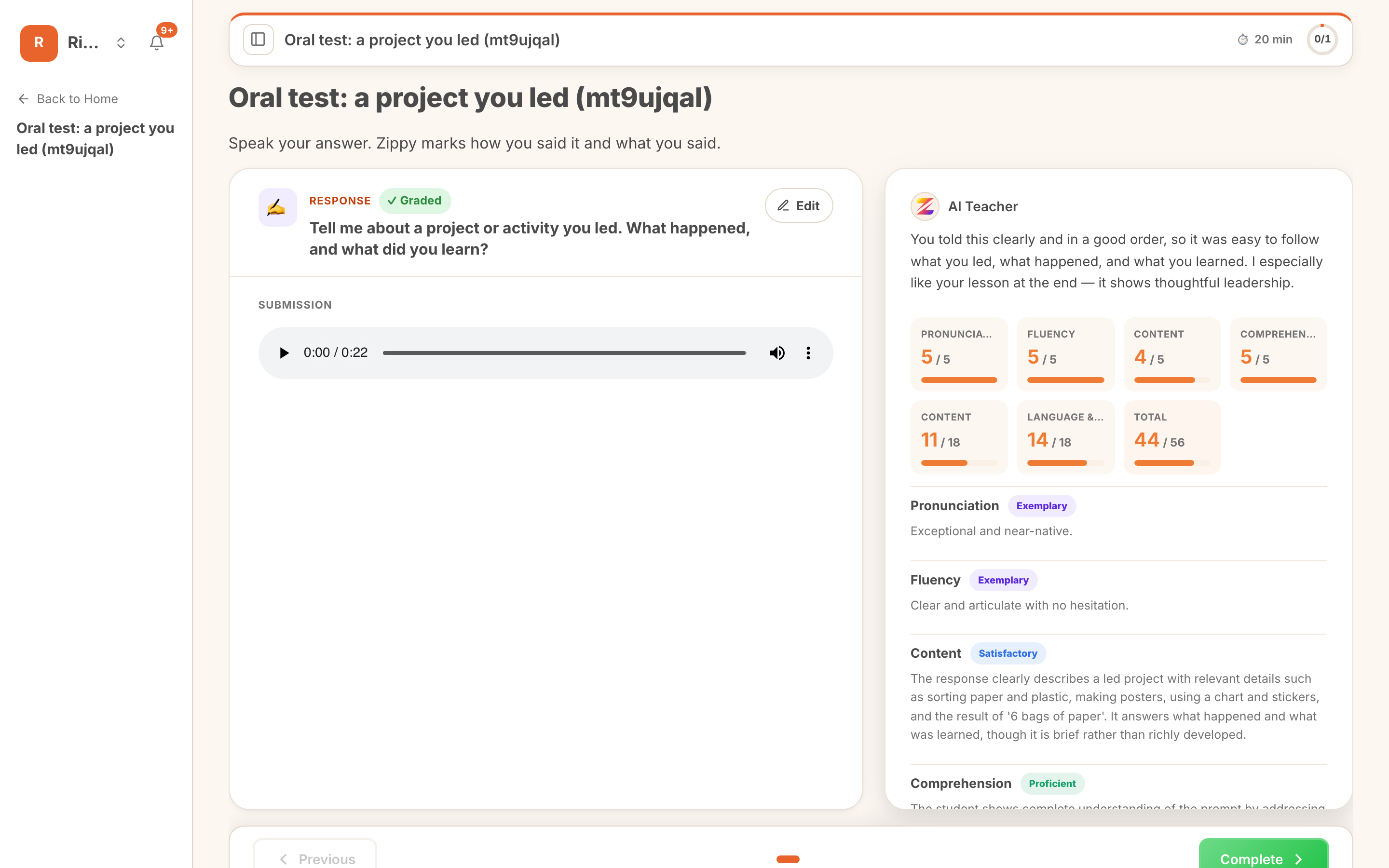
Six criteria and a total. Pronunciation and fluency come from the speech engine listening to the recording. Content and comprehension are marked from what the child said, on the speaking rubric's five point scale. Content and Language & Organisation are marked again against the writing rubric, out of 18 each, on the same words.
Scroll on, and every mark carries its reason:
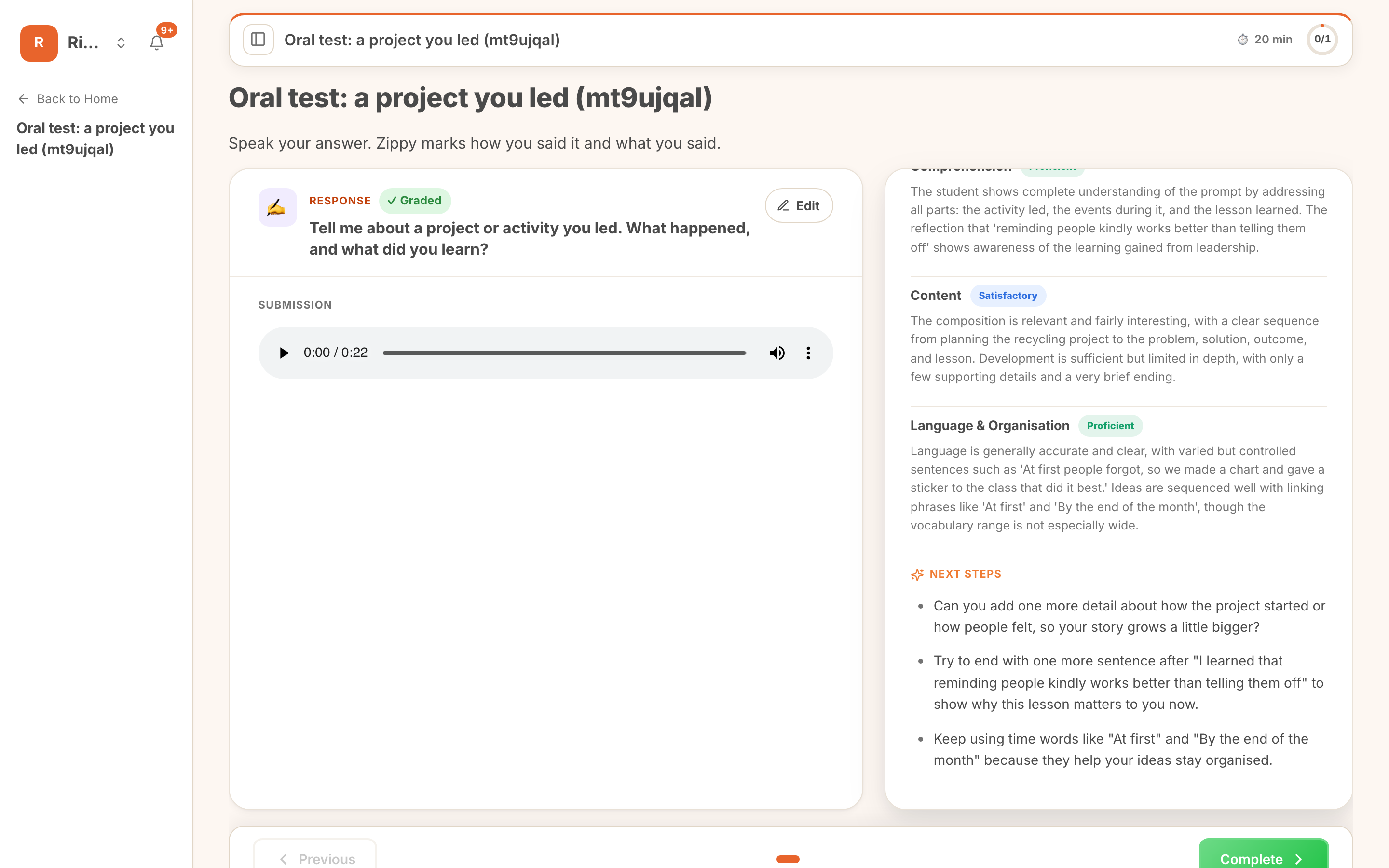
That is the part a child and a parent read: the band, and a sentence naming what earned it. Delivery and substance are scored separately because they fail separately, and a child can be clear and fluent while answering a different question.
Where to go next
- Configuring rubrics to set one up and stack it into a preset.
- Bulk grading a class set to put it to work.