
How AI helps teachers mark PSLE compositions
Thirty PSLE compositions marked against your own P5/6 bands, from photographed handwriting, with the reasoning attached and every mark waiting for your approval.
How we think about teaching, marking, and the responsible use of AI in the classroom, straight from the team.
Put two rubrics on the same spoken answer. A speaking rubric marks pronunciation and fluency, your own marking scheme marks the content, and one recording comes back with both.

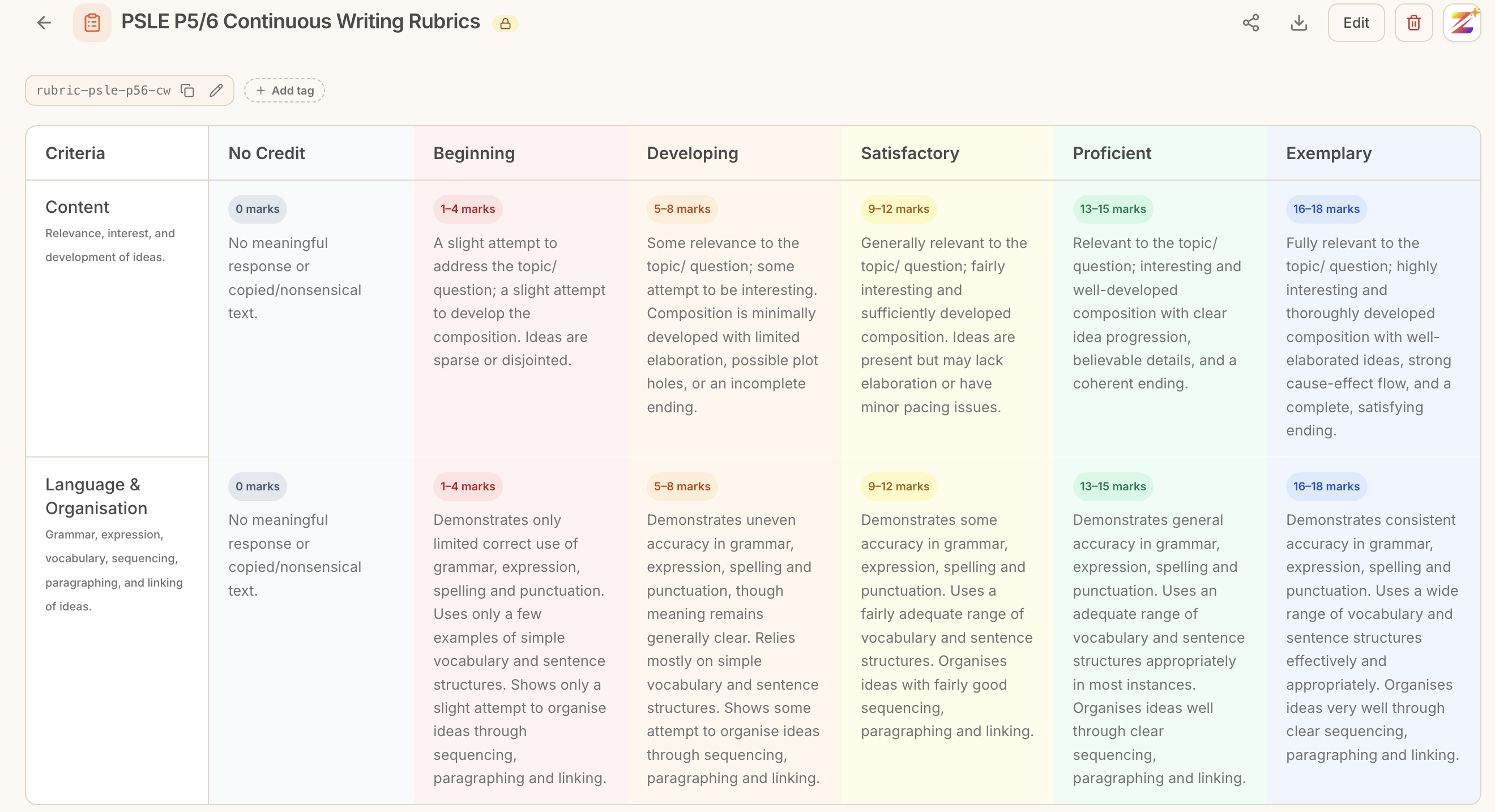
Thirty PSLE compositions marked against your own P5/6 bands, from photographed handwriting, with the reasoning attached and every mark waiting for your approval.

O-Level Situational Writing carries 30 marks: Task Fulfilment 10, Language 20. The band descriptors, the word count, and why Band 3 to 4 is the real gap.

PSLE continuous writing is marked out of 36: Content 18, Language and Organisation 18. What each band asks for, and how two scripts earned 32 and 34.
An AI marker on its own agrees with a human about a third of the time. What makes it useful is where the teacher's judgement goes in, and if it stays.
Teachers say Gen Alpha are harder to teach. The attention evidence is thinner than it sounds, and the workload numbers point somewhere other than marking.
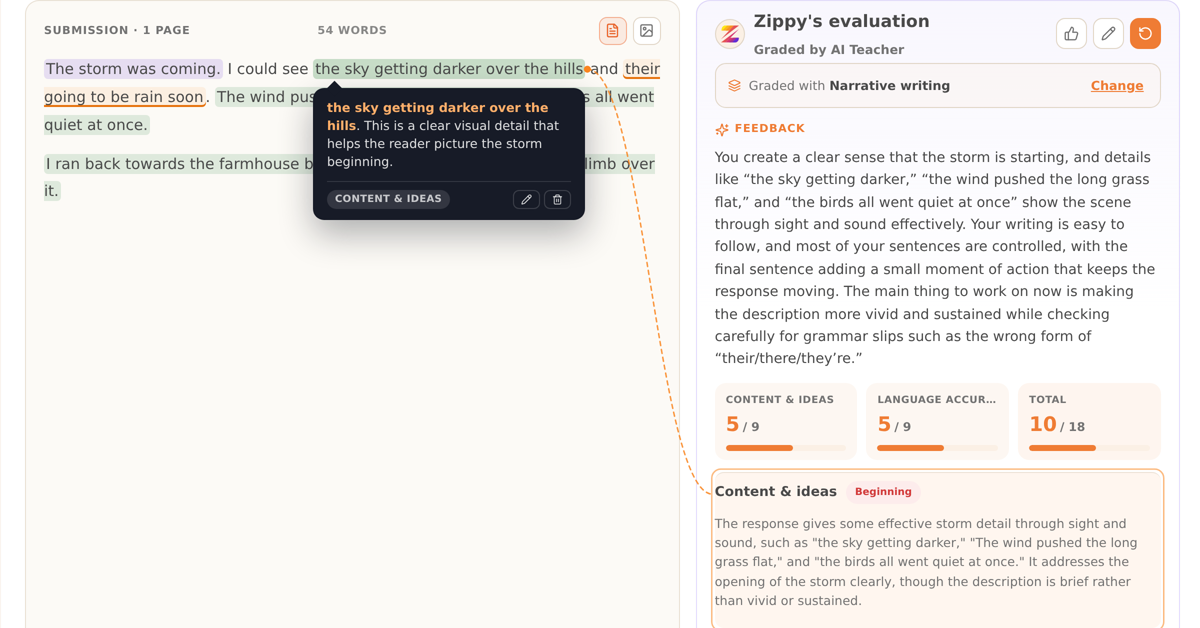
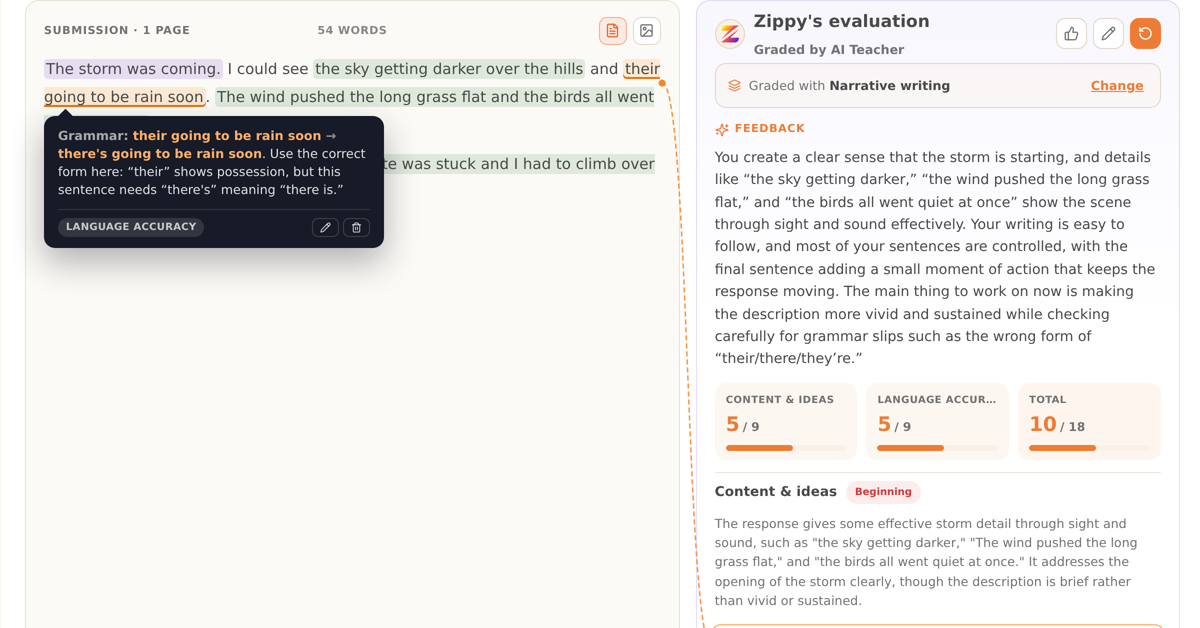
Edit or delete any annotation, re-grade only when you choose, undo any change in one click, and see which skills each piece of writing shows.

Almost every AI education pitch cites Bloom's two sigma. The study ran three weeks and has never been replicated. What personalised learning can really do.
In the largest meta-analysis of feedback, 38% of interventions made performance worse. What that means for AI grading, and for the rubric behind it.

Seven weeks to the written papers, one to the Oral. A PSLE 2026 revision timetable planned backwards from the real exam dates, and what to give up on.
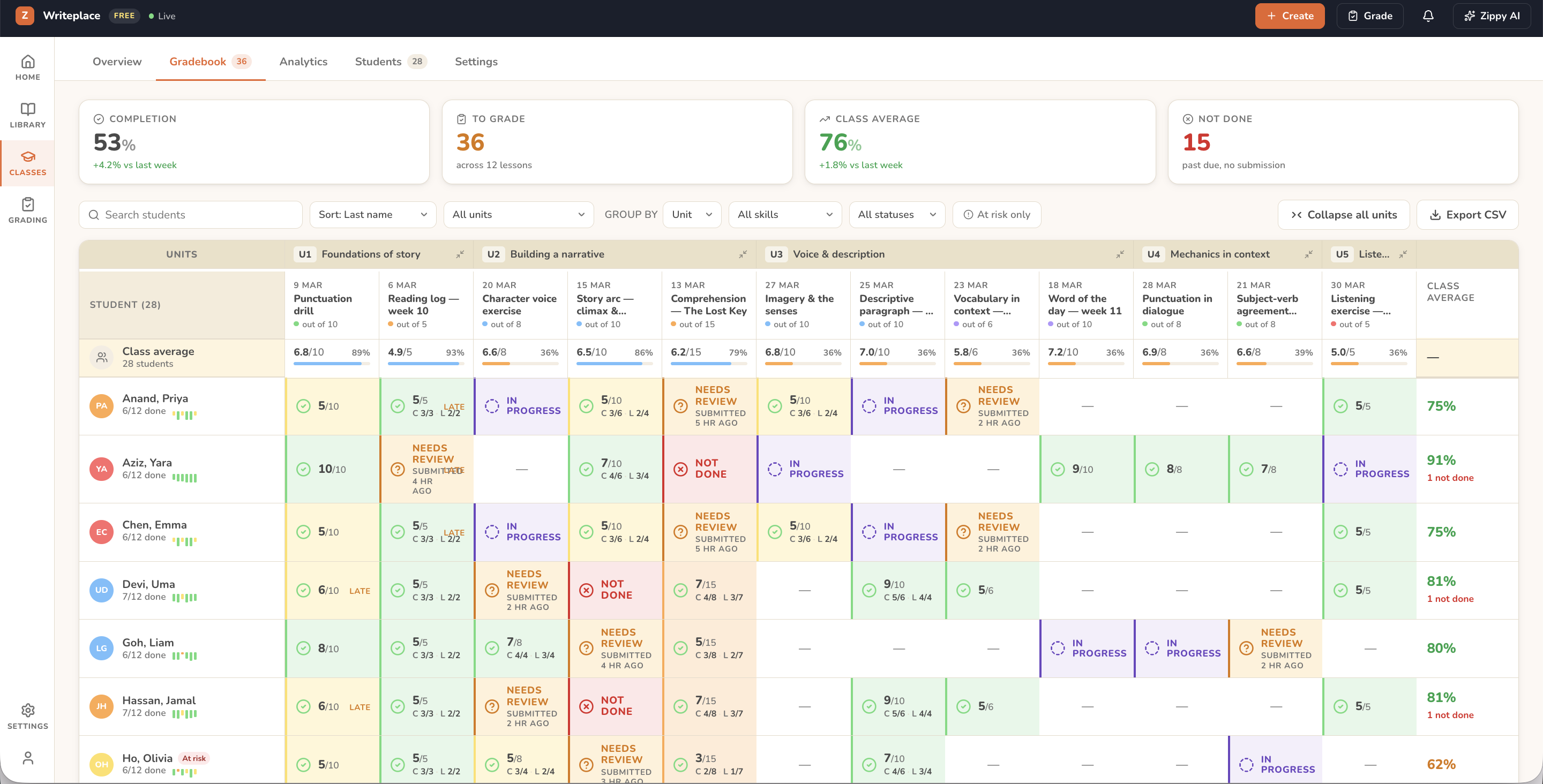
Read the class average row before any individual child. A dip down a column is usually the task, not the class. Why completion and attainment go together.
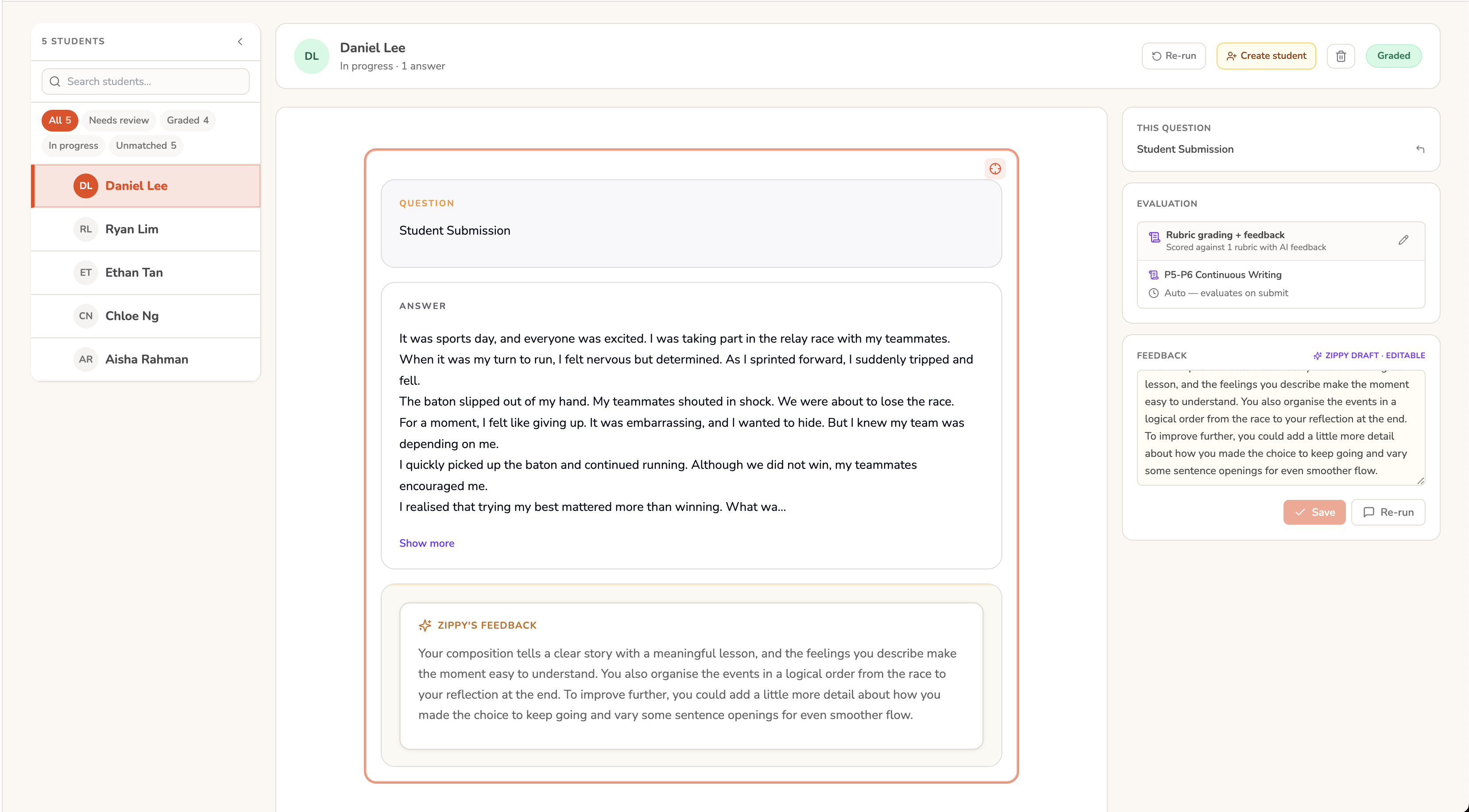
Thirty scripts, one rubric, and a first pass that is already done when you sit down. What actually changes when the marking is drafted before you start.
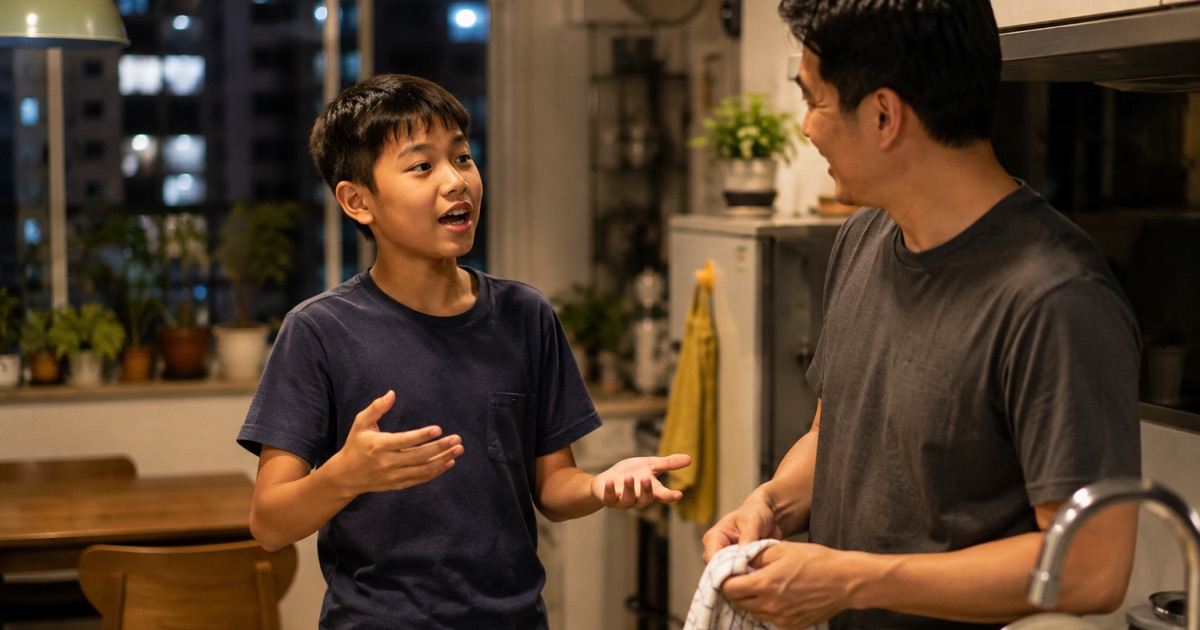
With the PSLE English Oral on 12-13 August 2026, a day-by-day plan to prepare your child in just ten minutes a night at home.
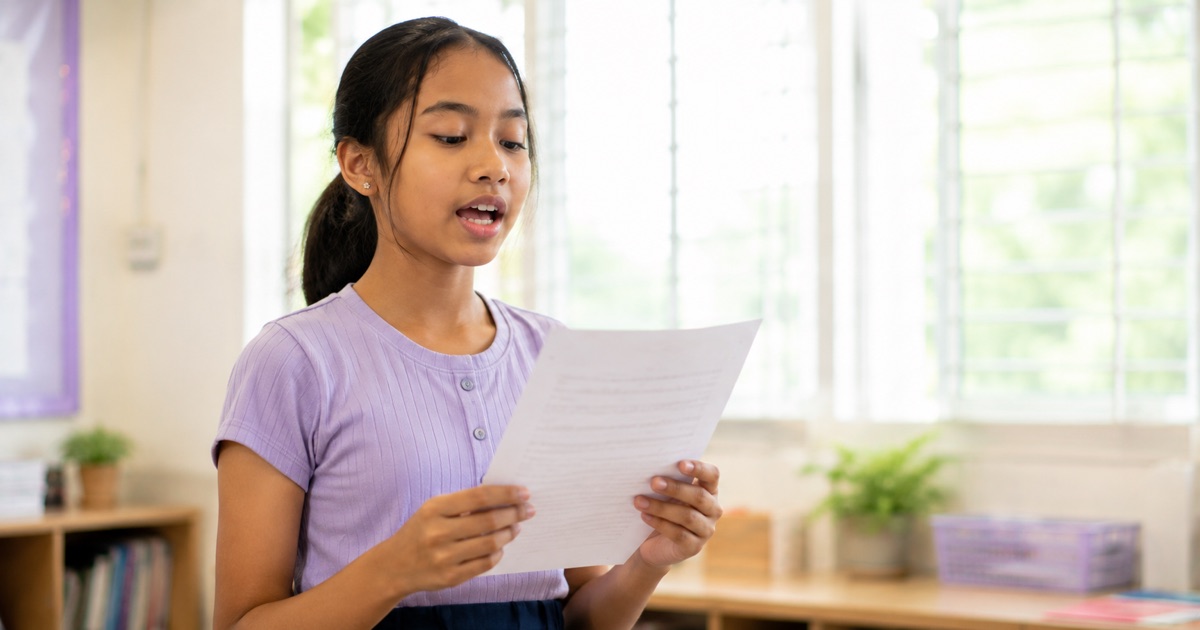
The easiest place to gain marks in the PSLE Oral. What examiners listen for in 2026, the mistakes that cost marks, and how to practise at home.

A step-by-step method for the PSLE Oral SBC: 5W1H to describe the photo, PEEL to give opinions, with weak and strong sample answers to copy.

Everything a parent needs for the 2026 PSLE English Oral on 12-13 August: the format, what is assessed, and a plan to prepare at home.
The July release: an editable reports builder, the whole-class gradebook, native PDF and DOCX export, an email-code CLI login, and a public client SDK.
A fast first pass that returns in seconds, a bounded background fan-out to the model, and live grading progress streamed to the browser.
The first ten weeks of shipping: bulk grading, AI authoring, an open-source CLI, the whole-class gradebook, the Discover library, and an import flow that works from a phone.

Every piece of student work becomes a targeted next step, for every learner, every week. What that looks like at the scale of a real class.

Forty essays can swallow a weekend. What changes when the first pass is drafted before you sit down, and why the marking still has to be yours.
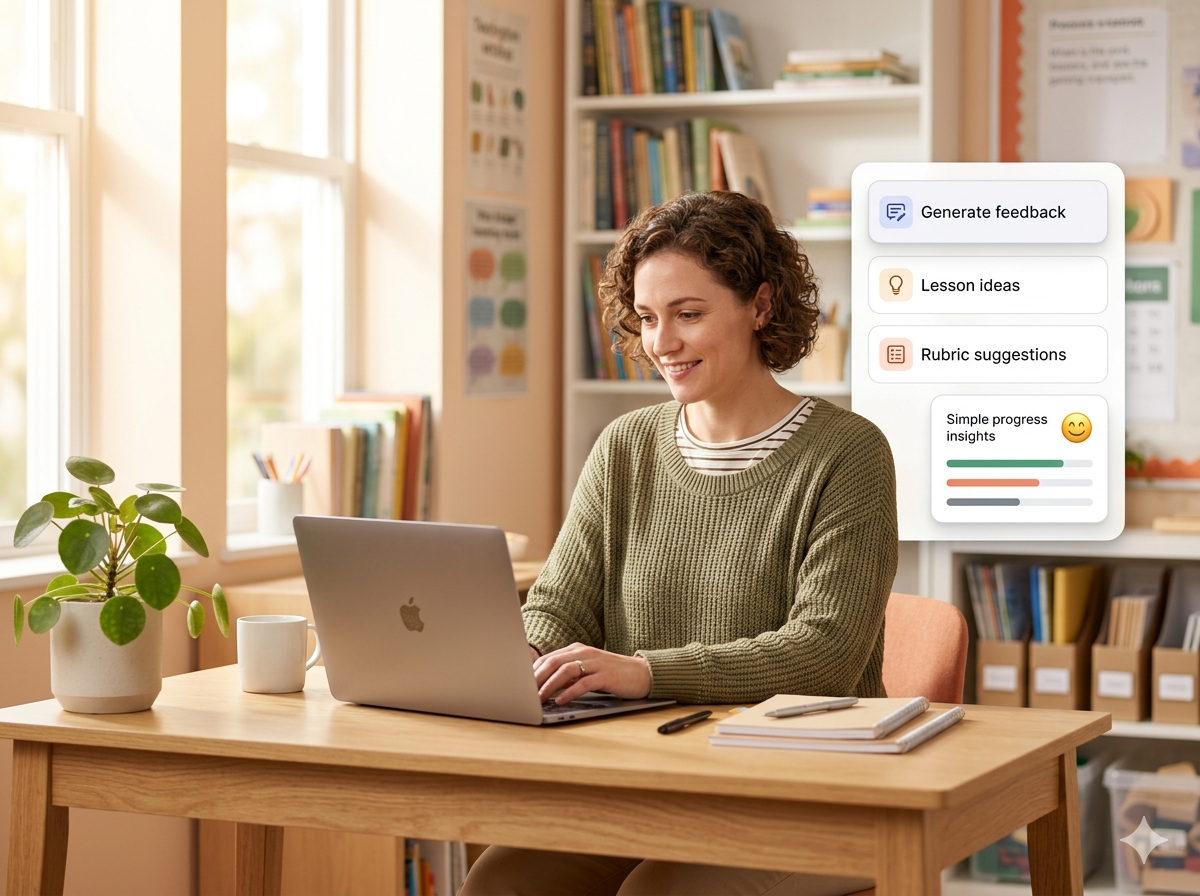
AI that drafts feedback and grades for your approval gives teachers their time back, without moving judgement out of the teacher's hands.
Mark a class of compositions against your own rubric in minutes, then review and approve every grade before a single student sees it.
Zippy is a multi-tenant learning platform for teams launching branded education products without rebuilding infrastructure per customer.

How The Write Place went live on Zippy: tenant isolation, theme configuration, and the course operations model behind a branded writing programme.