
PSLE SBC Practice 2: A Community Clean-Up (model answers)
How to use this page: cover the model answers, respond to each question out loud, then compare. The examiner notes explain where the marks are.
The stimulus
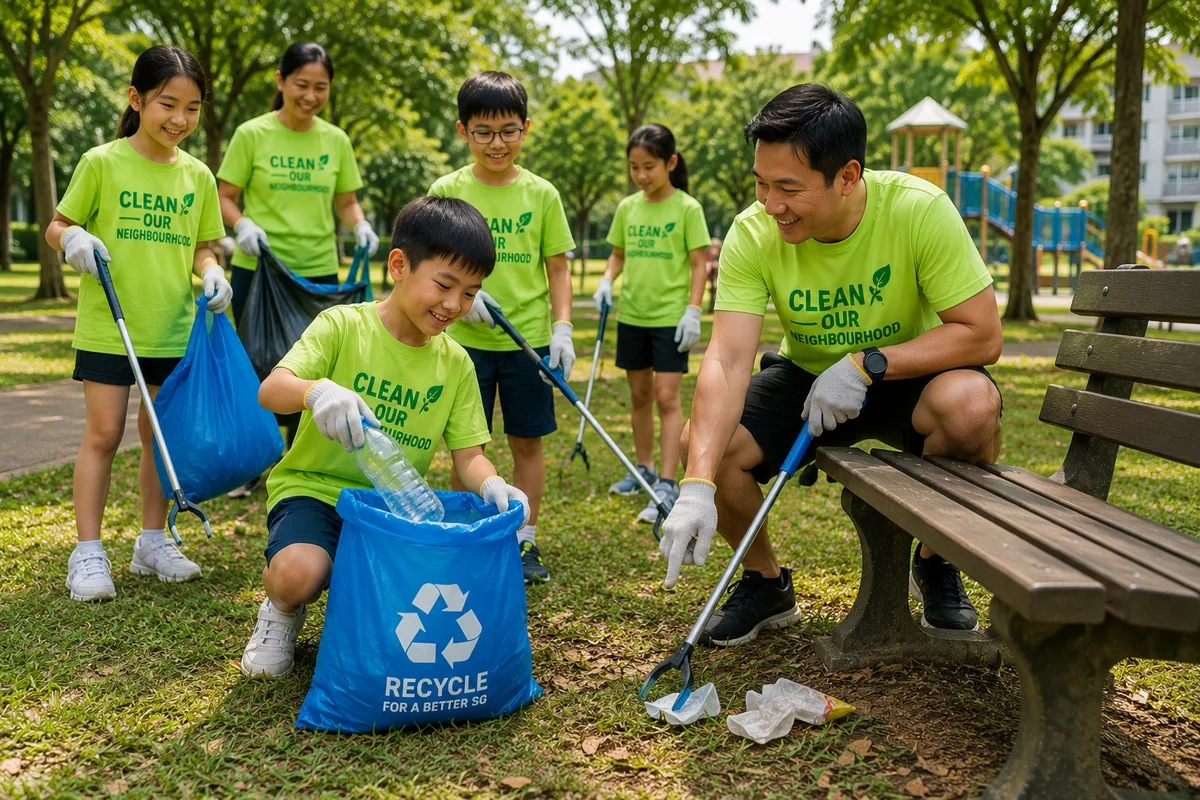
A group of children and adults wearing gloves and holding rubbish bags are picking up litter in a park. One child is placing a plastic bottle into a recycling bag; an adult points towards more litter under a bench. Everyone is wearing the same bright volunteer T-shirt, and the park looks green and sunny.
In the real exam the stimulus is a photograph; this image stands in for one. Describe it as if you can see it.
Question 1, "Look at the people in the picture. How do you think they are feeling? Why do you say so?"
The 2026 first question is picture-based and asks you to read the people's feelings and back it up with what you can see, not just list objects. Name the feeling, then point to the evidence.
Weak answer: "They feel happy. They are cleaning the park."
Strong answer: "I think the volunteers are feeling proud and cheerful. I say so because they are all wearing the same bright T-shirts and working together with a purpose, which suggests they are pleased to be helping. The child placing a bottle into the recycling bag looks focused and satisfied, and the adult pointing out more litter seems keen to get the job done. On such a sunny day, everyone appears energetic rather than tired, so they look like they are enjoying making the park cleaner."
Examiner note: the weak answer names a feeling but gives no evidence. The strong answer names several feelings (proud, cheerful, focused, keen) and justifies each with something visible in the photo ("working together with a purpose", "looks focused and satisfied", "energetic rather than tired"). Feeling plus evidence is exactly what the 2026 picture question rewards, and a quick formula is "They feel ___ because I can see ___."
Question 2, "Have you ever taken part in an activity to help your community? Tell me about it."
The mark is for a developed personal response, a real example, described with some detail.
Weak answer: "Yes, I helped once. It was good."
Strong answer: "Yes, I have. Last year, my class took part in a recycling drive at school where we collected old newspapers and cans from each classroom. My job was to sort the cans from the paper. It felt good because we collected so much in just one week, and our teacher told us it would all be reused instead of thrown away. It made me realise that even small efforts can add up to something meaningful."
Examiner note: the weak answer is vague, no example, no detail. The strong answer names a specific activity, explains the child's own role, and reflects on why it mattered. Specific beats general every time; "a recycling drive where I sorted cans" scores far better than "I helped once".
Question 3, "Do you think students should be required to do community work? Why?"
A broader opinion question. The mark is for a clear, reasoned view, and it's fine to weigh both sides.
Strong answer: "I think it is a good idea, though it should not feel like a punishment. On one hand, requiring community work makes sure every student gets the chance to help others and learn to care for their surroundings. On the other hand, if it is forced, some students might do it half-heartedly. So I feel schools should encourage it and make it enjoyable, like the clean-up in the picture, so that students want to take part rather than being made to."
Examiner note: the answer takes a position, supports it with reasons, considers a counter-view, and links back to the stimulus. That balance and development is what separates a top oral answer from a plain "yes because it's good."
Practise the skill, not the script
These are models, not scripts to memorise. Rehearse the habits, describe the photo in full, and give every opinion a reason and a real example, on new photos each day. That flexibility is what the exam actually rewards.
Back to PSLE Oral Practice · Next: SBC Practice 3: Screen Time at Home · Full method: How to Answer Any SBC Photo
Free practice from the team behind Zippy. Try the live grader →